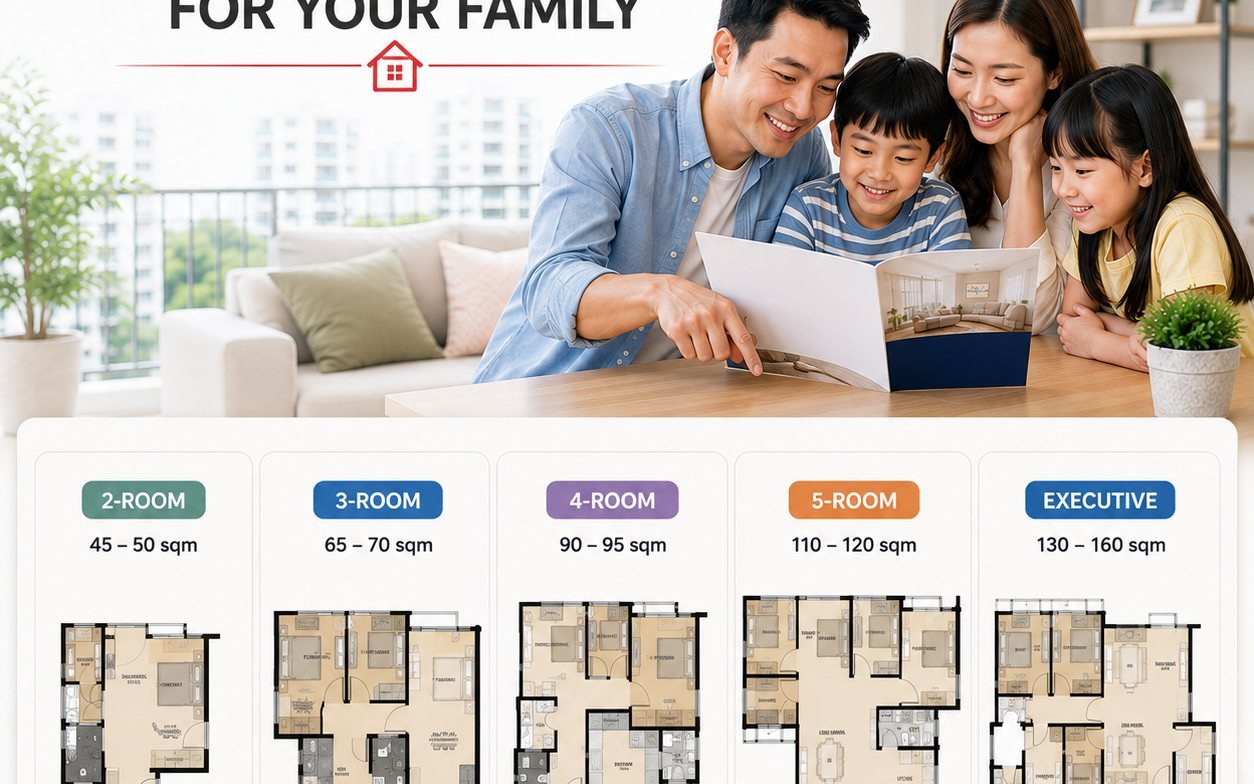
Match flat type to household, not just budget
It's tempting to buy the biggest flat your loan can stretch to, but flat type should start from how your household actually lives: how many bedrooms you need now, whether parents might move in later, and how long you plan to stay before the next upgrade.
| Flat type | Typical size | Best for |
|---|---|---|
| 2-Room Flexi | ~36–47 sqm | Singles, elderly couples (short/long lease options) |
| 3-Room | ~60–70 sqm | Couples, small families, first-time buyers on a budget |
| 4-Room | ~85–95 sqm | Most common family size — 2 children, or with one grandparent |
| 5-Room | ~110–120 sqm | Larger families, those wanting a study or larger living area |
| Executive | ~130–145 sqm | Multi-generational households, maximum space in an HDB flat |
Think about resale value too
4-room flats are consistently the most liquid resale flat type — the biggest pool of buyers wants exactly that size, which tends to support resale demand. Very large or unusual configurations can take longer to sell when you eventually move on.
If you're planning to have parents move in later (even if not immediately), factor that into flat type now — upsizing later means paying resale levy and going through the whole purchase process again.
Don't forget storey and orientation
Flat type sets the floor area, but storey range and facing affect daily livability and resale price just as much — higher floors typically command a premium, and west-facing units can run noticeably hotter in the afternoon.